Human rights defenders explain why reviving military courts could threaten soldiers' rights
The debate on restoring military justice continues in Ukraine, but experts from the Pryncyp center warn against the risks of vertical pressure on judges.
 👥Society
Photo: Ukrainska Pravda
Key points
- The Pryncyp center analyzed initiatives aimed at restoring military courts.
- Experts warn against the risk of the military command vertical influencing judges.
- Specialization within civilian courts is proposed instead of a separate system.
The issue of developing a military justice system in Ukraine has once again entered the spotlight amid the full-scale war. The topic is currently being processed by a Temporary Special Commission of the Verkhovna Rada, with participation from specialists at the Pryncyp human rights center for military personnel. Proponents of restoring military courts usually emphasize that cases should be tried by those with direct service experience. However, human rights advocates urge a careful assessment of all potential threats to the independence of the judiciary.
Risks of the military vertical and judicial independence
The core conflict lies in opposing fundamental principles: Ukrainian justice is based on impartiality, while military service relies on strict subordination and single-command. If judges are granted military ranks, the issue of potential interference by the Ministry of Defense or the General Staff in this process inevitably arises. According to experts, this opens the door to direct influence over judicial work through disciplinary statutes and subordination to commanders.
Recent years have already seen attempts to toughen penalties for military offenses through legislative initiatives that sometimes restricted judicial discretion. Under such conditions, a service member facing trial in a court tied to the military vertical risks encountering command pressure rather than solely the letter of the law.
Alternative paths to protecting military rights
Pryncyp specialists believe that civilian judges have developed sufficient practice during the full-scale invasion to objectively handle such cases. Where specialized knowledge is lacking, it can be compensated by involving qualified experts. Furthermore, combat experience alone guarantees neither legal expertise nor absolute judicial objectivity.
Instead of creating a separate, cumbersome military court system—the implementation of which is currently extremely difficult due to staffing shortages—experts propose introducing judicial specialization. Specifically, they advocate for specialized civilian judges handling offenses against established military service procedures within regular courts, aligning with European standards of justice.
Source Ukrainska Pravda — pravda.com.ua/news/2026/11/20/8063800/ ↗
Read next
 🏙️City
Fire ongoing aboard Russian vessel Sparta II in the Gulf of Finland following drone attack
Emergency services in Finnish territorial waters are continuing efforts to extinguish a fire on board the Russian cargo vessel Sparta II after a drone strike.
 🚨Events
How to Restore Fluffiness to Terry Towels: A Simple Household Trick
Terry towels often become stiff over time due to hard water and detergent buildup. A straightforward two-step washing method using common salt and citric acid can easily …
 🏙️City
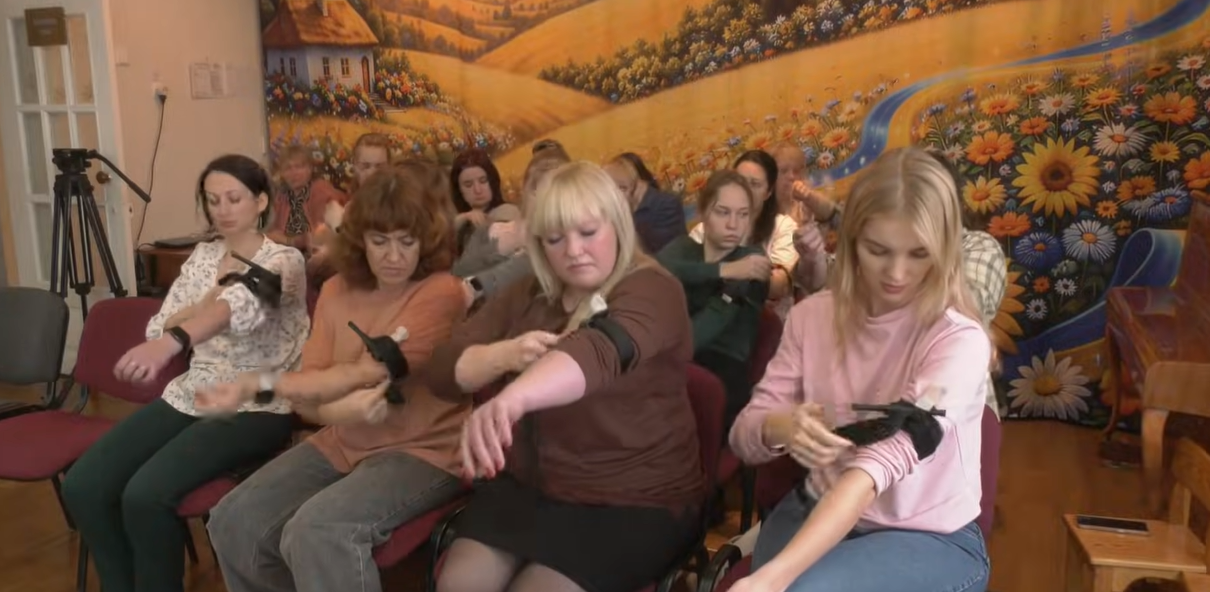
Child safety first: kindergarten staff learn essential first aid skills
Preschool staff are actively joining first aid training sessions to learn how to respond in emergencies and save lives.
 🚨Events
Nighttime Attack on Kyiv Region: Search for Missing Persons Continues in Dymer Following Apartment Building Strike
As a result of a hostile drone strike on an apartment building in the urban-type settlement of Dymer, Kyiv region, an entrance was destroyed, and fourteen people are out …
 🩺Health
The Philosophy of Repair: Why Everyday Maintenance and Infrastructure Care Become the Foundation of Life
Reflections on how Ukrainian society is learning to survive through the continuous repair of damaged infrastructure, energy grids, and natural ecosystems.
 🏙️City
Parliamentary Oversight of NABU: Expert Comments on Кривонос's Absence at Temporary Inquiry Commission
Political expert Volodymyr Sonyuk stated that NABU Director Semen Kryvonos must answer questions from the parliamentary Temporary Inquiry Commission regarding the testimo…