New Scientific Findings Suggest Eagles May Have Hunted Human Ancestors
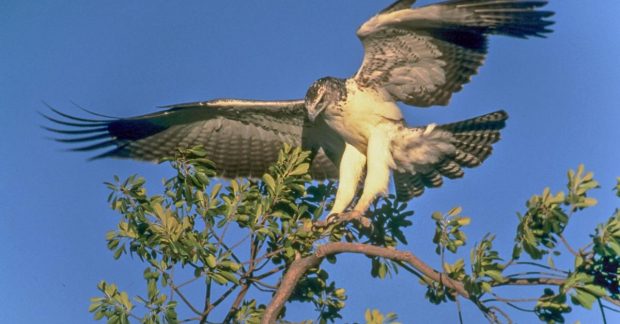
Researchers have found evidence that large birds of prey are capable of killing animals weighing over 20 kilograms, reviving discussions about prehistoric threats to early hominids.
 🎓Education
Photo: UNIAN
Key points
- Eagles capable of killing prey over 20 kg
- Sahara findings prove baboon predation
- Researchers suggest threat to australopithecines
For a long time, the scientific community believed that the body mass of both modern and ancient primates was simply too large for birds of prey to successfully target. However, recent discoveries in the Sahara Desert within Chad challenge this long-held assumption. Scientists have uncovered evidence proving that eagles are capable of killing relatively massive animals and carrying them back to their nests.
Claw Marks and New Evidence from the Sahara
During field research in the region, scientists discovered the bones of at least nine adult baboons bearing specific trauma marks. The average weight of the monkeys killed in these attacks was 22.2 kg, with the largest specimen reaching 26 kg. Deep claw marks on the remains strongly indicate that the birds independently hunted and killed such substantial prey.
According to researchers, targets are most frequently solitary individuals, such as elderly males or young animals separated from their troop. This behavior among large avian predators has prompted paleontologists to reconsider the evolutionary risks faced by early human ancestors millions of years ago.
A Potential Threat to Australopithecines
The findings open up possibilities that in the distant past, large raptors could have posed a genuine danger to early australopithecines. Specifically, members of the Australopithecus afarensis species, which lived in modern-day Ethiopia about 3.2 million years ago, weighed approximately 28 kilograms, which is comparable to the mass of the studied baboons.
At the same time, experts urge caution against overstating the frequency of such threats to ancient humans. Currently, researchers can definitively confirm only one such instance involving the suspected predation of an Australopithecus child in the Taung region approximately 2.8 million years ago.
Source UNIAN — unian.ua/science/orli-mogli-polyuvati-na-lyudey-v-minulomu-vcheni-z… ↗
Read next
 ⚽Sport
Carlos Alcaraz wins his first ATP Finals title
Spanish tennis star Carlos Alcaraz claimed the 2026 ATP Finals championship after defeating world number one Alexander Zverev in the final.
 🛡️Security
Frontline situation: highest intensity of combat on the Kostiantynivka and Pokrovsk axes
The General Staff of the Armed Forces of Ukraine reports 143 combat engagements throughout the day, with the east remaining the primary area of escalation.
 👥Society
Rescue operation in Kyiv region: 7-year-old boy pulled from rubble after 14 hours
In Dymer, following an enemy attack, rescuers pulled a child from a destroyed building who had spent nearly 14 hours under the debris.
 🎭Culture & Sport
Granddaughter of Former NSDC Secretary Mariya Danilova Joins 'The Voice of Ukraine'
19-year-old Mariya Danilova successfully auditioned for the 14th season of the talent show, choosing Nataliia Mohylevska's team while addressing the backlash over her fam…
 👥Society
Protecting Homes from Rodents Before Winter: Tips for Smila Residents
As cold weather arrives, mice and rats seek shelter and food inside buildings. Experts advise sealing tiny gaps and storing food securely.
 🛡️Security
Casualties rise in Dymer following Russian attack in Kyiv region
President Volodymyr Zelensky confirmed an increase in the death toll in Dymer and reported further Russian strikes on civilian infrastructure.